
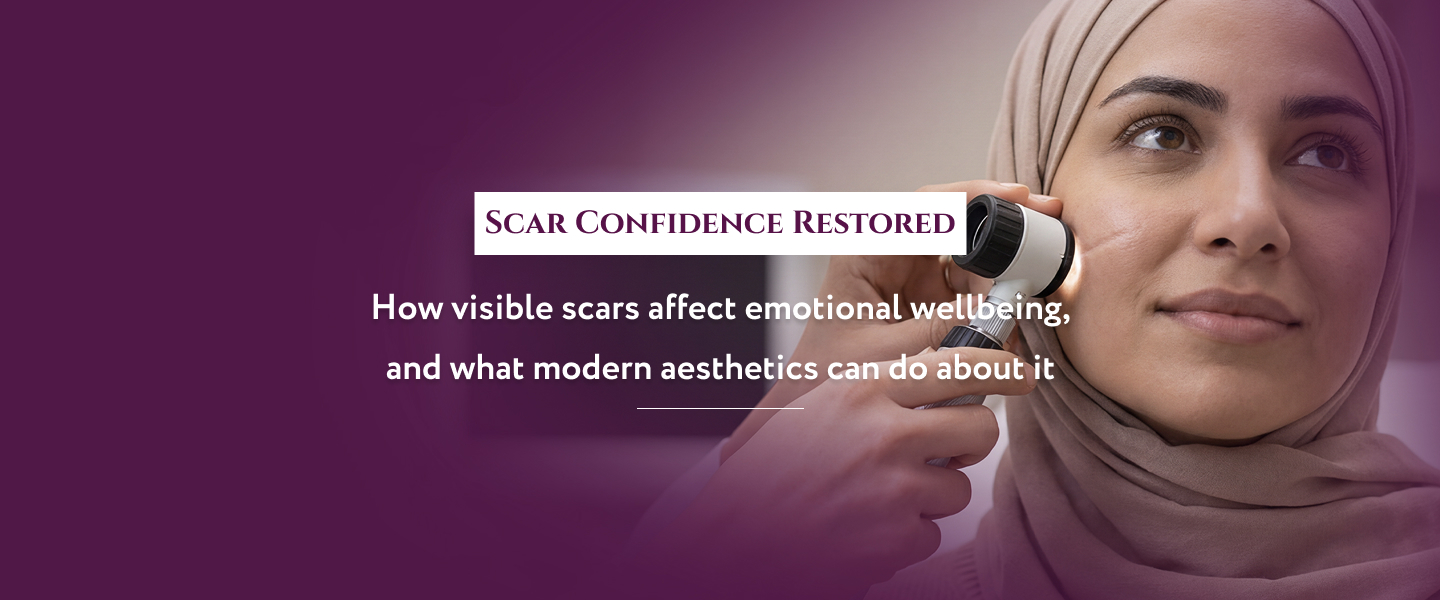
The Psychological Impact of Visible Scars and Modern Aesthetic Solutions
Scars tell stories, but sometimes, they tell stories we never wanted to share. At Royal Dutch Clinic, we often meet individuals who aren’t just concerned about how a scar looks, but how it makes them feel.
A visible scar can influence confidence, social comfort, professional presence, and even personal identity. While scars are medically harmless in many cases, their emotional imprint can run deeper than the skin.
Let’s talk about what scars really do to the mind, and how modern aesthetic solutions are changing that narrative.
More Than Skin Deep: The Emotional Weight of Visible Scars
A scar is a biological repair mechanism. When the skin heals after injury, surgery, acne, burns, or trauma, collagen forms in a different pattern. That’s science.
But psychologically? That’s a different conversation.
Visible scars, especially on the face, neck, or hands, can:
- Trigger self-consciousness
- Reduce social confidence
- Increase anxiety in professional settings
- Affect body image perception
- Revive memories of trauma or surgery
In regions like the UAE, where social presentation and grooming culture are strong, visible skin irregularities can amplify personal insecurities.
The brain is wired for social perception. Humans instinctively scan faces and skin during interaction.
When someone becomes hyper-aware of their scar, they may feel constantly “seen” for the wrong reason, even if others barely notice it.
That gap between perception and reality is where emotional strain begins.
The Hidden Psychological Effects of Scarring
1. Self-Image Distortion
People with visible scars sometimes report avoiding mirrors or photos. A scar becomes the focal point of identity, overshadowing everything else.
2. Social Withdrawal
Avoiding gatherings, declining invitations, choosing hairstyles or clothing to conceal scars — small behavioral changes compound over time.
3. Professional Hesitation
In client-facing or leadership roles, confidence matters. When someone feels distracted by appearance concerns, performance anxiety can increase.
4. Post-Traumatic Reminders
Scars from accidents, surgeries, or medical conditions can serve as emotional triggers. The skin heals; the memory lingers.
Understanding this psychological layer changes how we approach scar treatment. It’s not vanity. It’s quality of life.
Types of Visible Scars That Commonly Cause Emotional Distress
Not all scars are equal in impact. Some are more visible, textured, or pigmented.
Acne Scars
Common in young adults and professionals alike. They may appear as pitted depressions or uneven texture.
Surgical Scars
Often located in visible areas depending on procedure.
Burn Scars
Can involve texture, pigmentation, and surface irregularity.
Hyperpigmented Scars
Darker skin tones may develop post-inflammatory hyperpigmentation, especially in sun-exposed climates like Ras Al Khaimah.
Keloids and Hypertrophic Scars
Raised scars that extend beyond original wound boundaries.
Each requires a different approach, both technically and emotionally.
Modern Aesthetic Solutions: How Science Is Redefining Scar Management
Here’s the empowering part: scar treatment has evolved dramatically in the last decade.
Complete removal may not always be realistic, but significant improvement is achievable.
Let’s explore the options.
Laser Scar Treatment
Laser resurfacing works by targeting scar tissue and stimulating new collagen production. Controlled thermal energy encourages the skin to regenerate smoother, more uniform layers.
Best for:
- Acne scars
- Surgical scars
- Uneven texture
Results are progressive and improve over multiple sessions.
Microneedling (Dermapen Technology)
Microneedling creates micro-injuries in the skin, triggering the body’s natural healing cascade. This boosts collagen and elastin production, gradually softening scar texture.
Ideal for:
- Mild to moderate acne scarring
- Surface-level irregularities
- Skin rejuvenation alongside scar treatment
It’s minimally invasive and suitable for many skin types common in the UAE.
Scar Camouflage & Pigment Correction
For scars that are lighter or darker than surrounding skin, pigmentation correction techniques can restore tonal balance.
This may involve:
- Targeted light therapy
- Specialized pigment-based procedures
- Combination aesthetic protocols
The goal isn’t perfection. It’s harmony.
Advanced Combination Therapies
Modern dermatology rarely relies on a single tool. Combination protocols often deliver superior results.
Example:
Laser + Microneedling + Medical-grade skincare
Layered treatment approaches allow controlled resurfacing while strengthening surrounding tissue.
Why Climate Matters in Scar Treatment
Ras Al Khaimah’s climate plays a role in scar visibility.
High UV exposure can darken scars and prolong post-inflammatory pigmentation. Heat and humidity can also affect healing patterns.
That’s why treatment planning in the UAE must include:
- Strict sun protection protocols
- Tailored aftercare routines
- Skin-type-specific laser settings
Personalization is non-negotiable.
The Psychological Shift After Scar Treatment
Something interesting happens when scar visibility reduces.
Patients often report:
- Increased eye contact
- Comfort in social photos
- Willingness to attend events
- Renewed wardrobe confidence
- Reduced anxiety during conversations
It’s subtle, but powerful.
When someone feels aligned with their appearance, mental bandwidth frees up for bigger things: career growth, relationships, ambition.
That’s not cosmetic. That’s psychological liberation.
Managing Expectations: What Scar Treatments Can and Cannot Do
Let’s ground this in realism.
Modern aesthetic solutions can:
- Improve texture
- Reduce pigmentation contrast
- Soften raised scars
- Stimulate smoother collagen formation
They cannot:
- Completely erase every scar
- Replace surgical reconstruction in severe cases
- Deliver instant overnight perfection
Improvement is gradual.
Skin remodeling takes time. But measurable change is absolutely possible.
When Should You Consider Scar Treatment?
You may want to consult a specialist if:
- A scar affects your confidence
- You avoid certain social or professional situations
- You notice pigmentation changes worsening with sun exposure
- Makeup no longer provides sufficient coverage
Seeking help isn’t superficial. It’s proactive wellbeing.
Choosing the Right Aesthetic Clinic in Ras Al Khaimah
Scar treatment requires precision. The wrong energy settings or techniques can worsen pigmentation, especially in darker skin tones.
Look for:
- Experienced dermatology professionals
- Advanced laser technology
- Customized consultation protocols
- Clear pre- and post-care guidance
A clinic should assess not just the scar, but the skin type, lifestyle, and emotional goals behind treatment.
Beyond Treatment: Building Skin Confidence
While procedures improve appearance, confidence grows through mindset and realistic expectations.
- Healthy skin habits support results:
- Daily SPF application
- Medical-grade skincare
- Hydration
- Avoiding scar manipulation
- Consistent follow-ups
The goal is long-term skin integrity, not short-term fixes.
Breaking the Silence Around Scar Shame
There’s something important here.
Many people silently carry insecurity about scars, assuming they’re alone in feeling this way. They’re not.
Scars are common. Emotional response to scars is common. Seeking improvement is common.
Normalizing this conversation reduces stigma and empowers better choices.
A Future Where Scars Don’t Define You
Scars are part of human biology. But they don’t have to define identity or limit confidence.
Modern aesthetic science has shifted the narrative from concealment to correction, from insecurity to restoration.
If a visible scar feels like it’s holding you back, exploring advanced treatment options can be the first step toward reclaiming ease in your own skin.
Because sometimes, the smallest surface changes unlock the biggest internal transformations.
Visible scars may be physical, but their impact often lives in the mind. With the right expertise, technology, and care, both layers can be addressed thoughtfully.
Confidence is not about erasing history. It’s about ensuring your reflection aligns with how you feel inside.
And that alignment changes everything.