
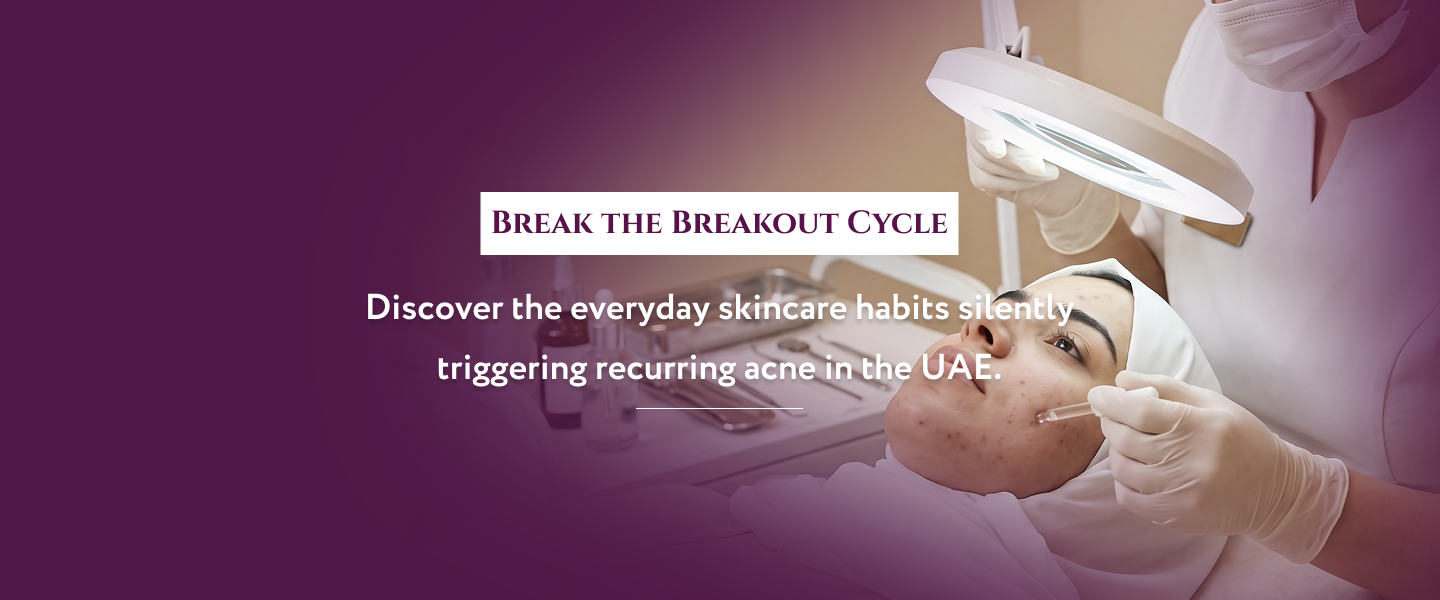
The Real Reason Your Breakouts Never Fully Go Away
Your Acne Is Probably Not Random, It’s Repeating a Pattern
You clear your acne. Things improve for a few days. Then suddenly, the breakouts return in the exact same areas.
For many UAE residents, this cycle feels endless. The frustrating part is that most people believe they’re doing everything correctly, using skincare products regularly, washing their face daily, avoiding oily foods, and trying trending routines online. Yet the acne keeps coming back.
At Royal Dutch Clinic Ras Al Khaimah, recurring acne is one of the most common skin concerns seen among both teenagers and adults. And in most cases, the issue isn’t a lack of effort; it’s daily skincare habits that silently damage the skin barrier, clog pores, or trigger inflammation repeatedly.
The UAE climate adds another layer to the problem. Heat, humidity, dust, sweat, air conditioning, and harsh sun exposure create the perfect environment for acne to persist if the skin is not managed correctly.
The good news?
Recurring acne usually has patterns. Once you identify what’s triggering your skin daily, breakouts become easier to control, and in many cases, prevent.
Why Acne Recurrence Is So Common in the UAE
Acne behaves differently in the UAE compared to cooler climates.
Your skin constantly experiences:
- Excess sweating from heat
- Increased oil production due to humidity
- Pore congestion from dust particles
- Dehydration caused by indoor air conditioning
- Skin barrier stress from UV exposure
This creates a cycle where the skin becomes oily on the surface but dehydrated underneath. Many people respond by over-cleansing or using harsh acne products, which only worsens the problem.
Recurring acne in the UAE is often not just hormonal, it’s environmental and behavioral.
The Difference Between Occasional Acne and Chronic Breakouts
Not every breakout is a major skin issue.
Occasional Acne:
- Appears around stress or hormonal changes
- Clears relatively quickly
- Limited to a few pimples
Chronic or Recurring Acne:
- Returns repeatedly in the same areas
- Leaves marks or pigmentation
- Feels constantly inflamed
- Persists despite skincare routines
If your skin never fully stabilizes, it usually means the root cause is still active.
Mistake #1: Over-Cleansing Your Face
One of the biggest skincare myths is that acne means your skin is “dirty.”
As a result, many people wash their face excessively, sometimes 4 to 5 times a day.
This strips away natural oils and weakens your skin barrier. When this happens:
- The skin becomes irritated
- Oil production increases further
- Breakouts worsen
In UAE weather, sweating is normal. But constantly washing your face aggressively creates imbalance instead of cleanliness.
What Works Better:
- Wash twice daily
- Use gentle cleansers
- Avoid harsh scrubs every day
Mistake #2: Using the Wrong Products for UAE Weather
Products that work in colder countries often fail in Gulf climates.
Heavy creams, pore-clogging sunscreens, or thick makeup products trap sweat and oil more easily in hot environments.
Common mistakes include:
- Using rich moisturizers meant for dry winter climates
- Applying multiple oily layers
- Ignoring non-comedogenic labels
Your skincare routine must match your environment, not social media trends.
Mistake #3: Skipping Professional Deep Cleansing
Home cleansing is important, but it cannot fully remove deep pore buildup caused by daily exposure to sweat, pollution, sunscreen, and oil.
Over time, this buildup hardens inside pores and triggers recurring acne.
This is where structured treatments like an Acne Facial or Hydrafacial treatment become important. They help:
- Remove embedded impurities
- Reduce congestion
- Improve hydration balance
- Support healthier skin turnover
People who repeatedly experience blackheads, whiteheads, or under-the-skin bumps often need more than a basic skincare routine.
Mistake #4: Touching Your Face Constantly
This sounds simple, but it’s one of the most ignored acne triggers.
Phones, hands, pillowcases, and even work desks carry bacteria and oil.
Constantly touching your:
- Chin
- Jawline
- Forehead
transfers bacteria directly onto already stressed skin.
Many adult acne cases around the jawline are linked to unconscious face-touching habits.
Mistake #5: Ignoring Dehydrated Skin
A lot of acne-prone people avoid moisturizers because they fear oiliness.
This is a major mistake.
When your skin lacks water:
- It produces more oil to compensate
- Inflammation increases
- Breakouts become more aggressive
In the UAE, air conditioning dehydrates skin faster than most people realize.
Hydration is not optional for acne-prone skin, it’s necessary.
Mistake #6: Using Too Many Active Ingredients Together
Many people combine:
- Salicylic acid
- Retinol
- Benzoyl peroxide
- AHAs
- Vitamin C
all at once.
Instead of improving acne, this damages the skin barrier and creates irritation.
Signs of overactive skincare:
- Burning sensation
- Peeling
- Tightness
- Increased redness
- Sudden breakouts
More products do not equal better skin.
Mistake #7: Sleeping with Makeup or Sunscreen Residue
In UAE weather, sunscreen is essential. But failing to remove it properly at night causes congestion over time.
The same applies to makeup.
Sleeping with residue on your skin traps:
- Sweat
- Dirt
- Oil
- Pollutants
inside your pores for hours.
This is one of the fastest ways to trigger recurring breakouts.
Mistake #8: Changing Products Too Frequently
One week it’s Korean skincare. The next week it’s an acne serum trending online.
Constantly changing products confuses your skin and makes it difficult to identify what’s actually causing irritation.
Most skincare products need:
- 4–6 weeks for visible results
- Consistency to work effectively
Trend-based skincare routines often worsen acne because they lack structure.
Mistake #9: Treating Acne Without Understanding the Root Cause
Acne is not always caused by the same trigger.
Different people break out due to:
- Hormones
- Stress
- Sweat
- Product reactions
- Diet
- Poor cleansing habits
- Dehydration
Treating every breakout with the same approach rarely works.
This is why personalized skin assessment matters.
Why Acne Facials Matter More in Desert Climates
The UAE climate accelerates pore congestion faster than many other regions.
Regular acne-focused facials help:
- Remove buildup before it becomes inflammation
- Reduce excess oil without over-drying
- Improve skin hydration
- Calm irritated skin
Unlike aggressive DIY methods, professional treatments work in a controlled and balanced way.
How Often Should Acne-Prone Skin Get Facials?
This depends on acne severity.
Mild Acne:
Every 4–6 weeks
Moderate Acne:
Every 3–4 weeks
Congested or Active Acne:
Every 2–3 weeks initially
The goal is consistency, not over-treatment.
Daily Habits That Help Reduce Acne Recurrence
Simple habits matter more than complicated routines.
Focus on:
- Cleaning your phone regularly
- Changing pillowcases often
- Staying hydrated
- Removing sunscreen properly
- Avoiding harsh scrubbing
- Using lightweight skincare products
Small daily corrections often create the biggest long-term improvements.
When Should You Seek Professional Help?
You should seek professional guidance if:
- Acne leaves scars or marks
- Breakouts are painful
- Products are no longer helping
- Acne affects confidence or mental well-being
- You constantly experience inflammation
Delaying treatment often increases the risk of post-acne pigmentation and scarring.
Final Thoughts: Stop Fighting Acne Blindly
Most recurring acne is not random, it’s repetitive behavior combined with environmental stress.
The solution is not buying more products or copying trends online.
It’s understanding:
- What your skin is reacting to
- What the UAE climate is doing to your skin daily
- Which habits are silently triggering inflammation
Once you fix the root patterns, your skin finally gets the chance to stabilize.
FAQs
1. Why does my acne keep coming back even after treatment?
Recurring acne usually happens because the root trigger, like clogged pores, dehydration, hormones, or improper skincare habits, has not been addressed fully.
2. Can UAE weather make acne worse?
Yes. Heat, humidity, sweat, dust, and air conditioning can increase oil production, congestion, and skin irritation.
3. Is oily skin the same as hydrated skin?
No. Oily skin can still be dehydrated. In fact, dehydration often causes the skin to produce more oil.
4. How often should acne-prone skin get facials?
Most acne-prone skin benefits from professional facials every 3–4 weeks, depending on severity.
5. Can over-cleansing cause acne?
Yes. Excessive cleansing strips the skin barrier and can increase oil production and irritation.
6. Why do I break out after trying new skincare products?
Frequent product switching or strong active ingredients can irritate the skin barrier and trigger inflammation.
7. Are acne facials safe for sensitive skin?
Yes, when customized properly. Professional acne facials are designed to reduce congestion while protecting the skin barrier.