
Hair Loss Treatments vs Scalp Micropigmentation: What Works for Men and Women in the UAE
Hair loss is one of the most common aesthetic concerns affecting both men and women, and the search for effective solutions often leads to confusion.
Some people look for medical therapies, while others explore cosmetic procedures that create the appearance of fuller hair.
One of the most talked-about modern approaches is achieving Natural Hair Density through Scalp Pigmentation, a technique that creates the visual effect of thicker hair without surgery. Because multiple options are available today, understanding the difference between treatments is essential before deciding what truly works.
Hair thinning can occur for many reasons including genetics, hormonal changes, stress, medical conditions, and environmental factors.
In warm climates, excessive sweating, sun exposure, and scalp irritation may also contribute to hair weakening over time.
For some individuals, hair loss begins gradually, while for others it may appear suddenly, causing noticeable changes in appearance and confidence.
Men and women often experience hair loss differently. Men may notice receding hairlines or bald spots, while women usually experience overall thinning rather than complete baldness.
Because the pattern and cause of hair loss vary, the solution must also be chosen carefully. What works for one person may not be suitable for another, which is why comparing available options helps in making an informed decision.
Many people initially explore shampoos, oils, supplements, and clinical procedures as part of their search for effective hair loss treatments, hoping to restore natural growth. While some of these methods can slow down hair loss or improve scalp health, they may not always restore visible density, especially when hair follicles are already weakened. This is where modern aesthetic techniques such as scalp micropigmentation offer an alternative approach by focusing on appearance rather than regrowth.
Understanding Why Hair Loss Happens
Hair loss is not always caused by a single factor. In many cases, it results from a combination of genetics, lifestyle habits, and environmental exposure.
Hormonal imbalance is one of the most common reasons for hair thinning. Changes in hormone levels can affect the hair growth cycle, causing follicles to shrink and produce thinner strands.
Stress is another major factor. Physical or emotional stress can push hair follicles into a resting phase, leading to increased shedding.
Nutritional deficiencies may also weaken hair growth. Lack of vitamins, minerals, or protein can affect the strength of hair strands and slow down new growth.
Environmental exposure, including heat and pollution, can damage the scalp and make hair more fragile over time.
Understanding the cause of hair loss is important because different causes require different solutions.
What Are Traditional Hair Loss Treatments?
Hair loss treatments are designed to slow down hair thinning, stimulate growth, or strengthen existing hair. These treatments may include topical products, medications, therapy-based procedures, or clinical treatments that target the scalp.
Some treatments focus on improving blood circulation in the scalp to support healthier follicles. Others work by balancing hormones or providing nutrients needed for hair growth. In early stages of hair loss, these approaches may help maintain existing hair and delay further thinning.
However, results are often gradual and vary from person to person. In cases where hair follicles are no longer active, treatments may not fully restore lost density. This is why some individuals look for cosmetic solutions that provide immediate visible improvement.
What Is Scalp Micropigmentation?
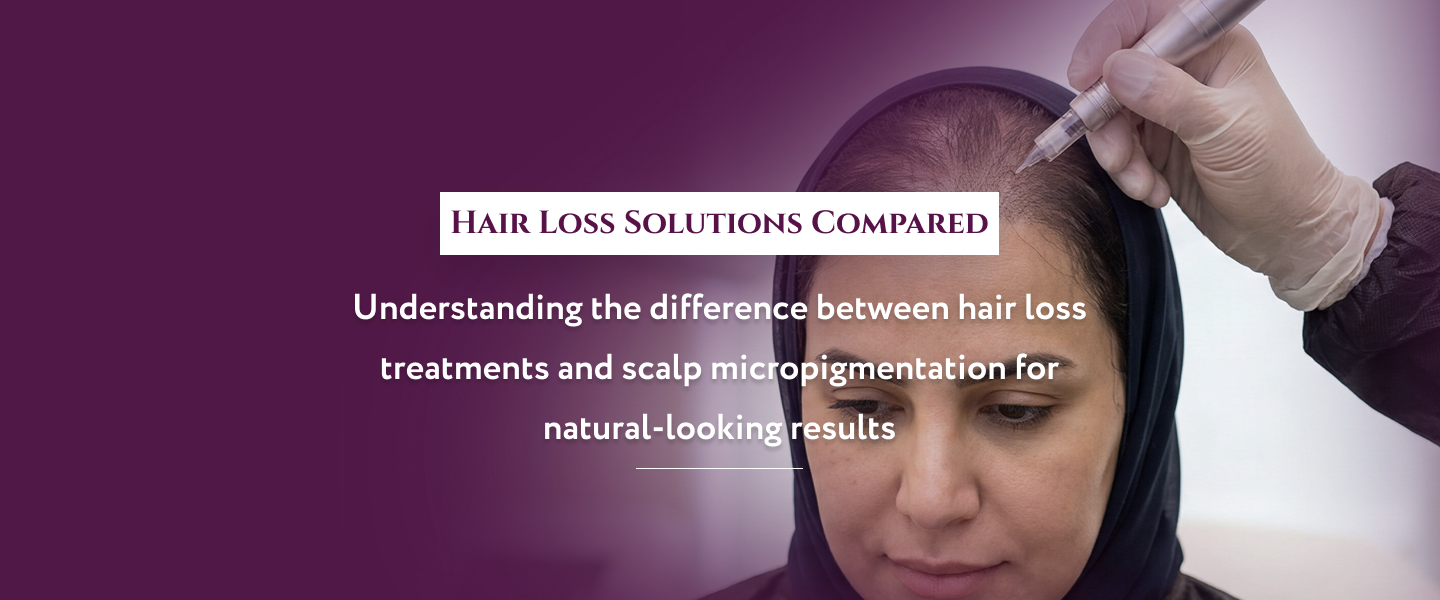
Scalp micropigmentation is a non-surgical cosmetic procedure that creates the appearance of hair follicles using specialized pigments. Tiny dots are placed on the scalp to replicate the look of natural hair roots, giving the illusion of fuller hair.
Unlike treatments that try to regrow hair, this method focuses on visual density. It is especially useful for people with thinning hair, receding hairlines, or visible scalp areas.
The procedure is carefully performed to match the natural hair color and skin tone, making the results look realistic. Because it does not involve surgery or recovery time, many people prefer this option when they want a noticeable change without long treatment periods.
Key Differences Between Hair Loss Treatments and Scalp Micropigmentation
Understanding the difference between these two approaches makes it easier to choose the right solution.
Hair loss treatments aim to improve hair growth and scalp health. They are suitable for people who still have active hair follicles and want to maintain natural growth.
Scalp micropigmentation focuses on appearance rather than regrowth. It is ideal for individuals who want immediate visual improvement, even if hair cannot grow back naturally.
Treatments may take months to show results, while micropigmentation provides visible change within a few sessions.
Hair treatments often require continuous use, while scalp pigmentation usually requires only occasional touch-ups.
Both options have benefits, and the right choice depends on the condition of the scalp and the desired outcome.
Which Option Works Better for Men?
Men often experience patterned hair loss, such as receding hairlines or bald spots on the crown. In early stages, treatments may help slow down the process, but in advanced stages, restoring natural density becomes difficult.
Scalp micropigmentation is popular among men because it can create the appearance of a closely shaved head or fuller hairline. This gives a clean, natural look without the need for surgery.
Men who prefer a low-maintenance solution often choose pigmentation because it does not require daily products or long recovery periods.
Which Option Works Better for Women?
Women usually experience thinning rather than complete baldness. Because of this, treatments that strengthen existing hair may be helpful in early stages.
However, when thinning becomes visible along the part line or crown, scalp pigmentation can help create the illusion of thicker hair. By adding pigment between hair strands, the scalp becomes less visible, making the hair appear fuller.
This approach is especially useful for women who want natural-looking results without cutting or shaving their hair.
When to Choose Hair Loss Treatments
Hair loss treatments may be suitable if:
- Hair thinning has started recently
- Hair follicles are still active
- You want to maintain natural growth
- You are comfortable with gradual results
These treatments work best when started early and continued consistently.
When to Choose Scalp Micropigmentation
Scalp micropigmentation may be a better choice if:
- Hair loss is advanced
- You want immediate visible density
- Other treatments have not worked
- You prefer a non-surgical solution
This method is also suitable for people who want to improve the look of hairlines, scars, or thinning areas.
Can Both Methods Be Combined?
In many cases, combining treatments can give the best results.
Some people use medical treatments to maintain existing hair while using pigmentation to improve overall appearance.
This combination allows individuals to keep natural hair while also creating the look of fuller density.
A professional consultation helps determine whether a combined approach is suitable.
Choosing the Right Solution for Long-Term Confidence
Hair loss can affect self-image and confidence, but modern aesthetic solutions make it possible to manage the condition effectively. Whether the goal is to slow down thinning, improve scalp health, or create the appearance of fuller hair, there are options available for different needs.
The key is choosing a solution based on realistic expectations, hair condition, and personal preference.
Professional guidance ensures that the selected treatment matches both the scalp condition and the desired result.
For individuals considering advanced solutions such as scalp micropigmentation or clinical hair restoration procedures, consulting experienced specialists at Royal Dutch Clinic can help determine the most suitable approach for achieving natural-looking results and long-term confidence.
FAQ’s
1. Is scalp micropigmentation better than hair loss treatments?
Scalp micropigmentation and hair loss treatments serve different purposes. Hair loss treatments aim to slow down hair thinning or stimulate natural growth, while scalp micropigmentation creates the appearance of fuller hair by adding pigment to the scalp. People with early-stage hair loss may benefit from treatments, while those with advanced thinning often choose micropigmentation for immediate visible results.
2. How long does scalp micropigmentation last?
Scalp micropigmentation is considered a long-lasting cosmetic procedure. Results typically last between 3 to 5 years, depending on skin type, sun exposure, and aftercare. Occasional touch-up sessions may be required to maintain the natural look over time.
3. Can scalp micropigmentation work for both men and women?
Yes, scalp micropigmentation is suitable for both men and women. In men, it is commonly used to create the appearance of a shaved head or fuller hairline. In women, it is often used to reduce the visibility of the scalp in thinning areas, making the hair appear denser without changing the hairstyle.
4. Are hair loss treatments effective for permanent hair loss?
Hair loss treatments can be effective in slowing down hair thinning or strengthening existing hair, but they may not restore hair in areas where follicles are no longer active. In cases of permanent hair loss, cosmetic solutions such as scalp micropigmentation may provide a more visible improvement.
5. Is scalp micropigmentation safe for sensitive scalp or hot climates?
Scalp micropigmentation is generally safe when performed by trained professionals using approved pigments and sterile equipment. It is also suitable for warm climates, but proper aftercare, including sun protection and scalp care, is important to maintain the results and prevent fading.